Climbing & Via Ferrata in the Alps
Learn about limestone crags, iron pathways, climbing gear systems, and the essential safety protocols for vertical rock.
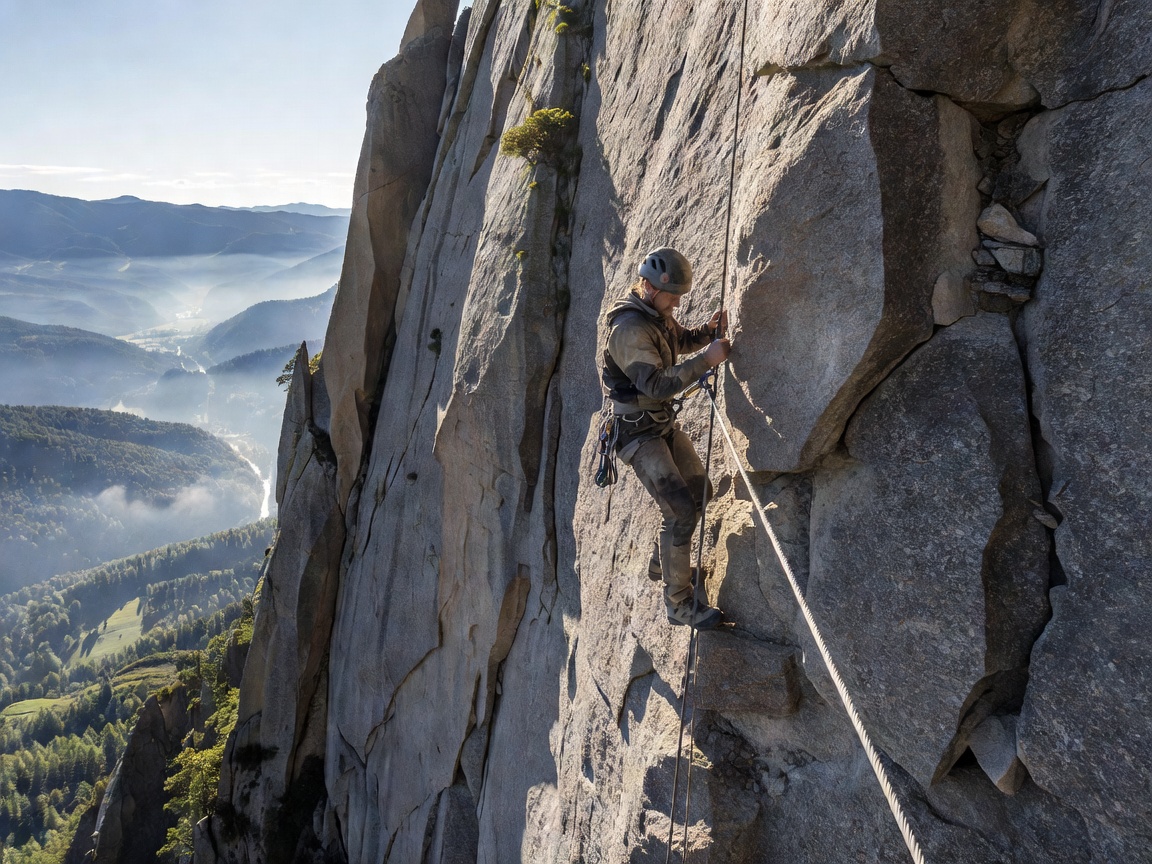
The Spectrum of Vertical Climbing
Climbing in the Alps spans multiple disciplines, ranging from heavily protected indoor walls to remote multi-pitch rock faces that require years of dedicated training.
- Bouldering: Climbing short, low rock formations without ropes over portable foam landing pads (crash pads). Focuses entirely on pure movement and power.
- Sport Climbing: Ascending single-pitch or multi-pitch routes equipped with permanent pre-drilled steel expansion bolts. Ropes and quickdraws protect the climber from falls.
- Via Ferrata ("Iron Path"): Protected climbing routes fitted with steel cables, iron rungs, ladders, and suspension bridges fixed permanently to the rock.
- Alpine Trad Climbing: Ascending large rock faces where climbers place their own removable protection devices (cams and nuts) into natural rock fissures.
Understanding Via Ferrata
Via ferrata originated in the Italian Dolomites as military transit paths and has evolved into one of the most accessible ways for mountain enthusiasts to experience steep vertical exposure safely.
In a via ferrata, climbers wear a standard climbing harness attached to a specialized Via Ferrata Set. This lanyard system contains two locking carabiners and an integrated progressive textile energy absorber designed to cushion the impact force if a fall occurs.
Routes are graded from A (Easy/Walkway with cable handrail) to E/F (Extremely Difficult/Overhanging rock requiring high upper body strength). Beginners should always start on Grade A and B routes.
Essential Climbing Hardware
All climbing safety gear is rigorously tested and certified under European standard (CE/EN) and UIAA regulations:
- Climbing Harness: A load-bearing waist belt and leg loop assembly that secures you to the rope or lanyard system.
- Climbing Helmet: Engineered specifically to protect against rockfall from above as well as impact against the rock during a fall.
- Dynamic Ropes: Elastic nylon ropes designed to stretch during a fall, reducing the impact force delivered to the climber and the anchor points.
- Belay Device & Locking Carabiner: A mechanical friction device used by the ground partner to catch and hold a climber's fall smoothly.
- Climbing Shoes: Tight, rubber-coated shoes with specialized sticky soles that allow feet to stand securely on microscopic rock edges.
Why Formal Instruction is Critical
Unlike hiking, climbing allows zero margin for procedural error. Tying knots incorrectly, failing to double-check harnesses, or clipping carabiners improperly can lead to catastrophic accidents.
Never attempt technical roped climbing or unsupervised via ferrata without completing certified hands-on courses taught by qualified mountain guides (IFMGA / UIAGM) or recognized national Alpine club instructors.